For decades, advertisers have expected audience patterns to shift dramatically around holidays. Morning commutes disappear, office traffic slows, and traditional radio and television often experience noticeable fluctuations in listening and viewing habits.
Podcasting is different.
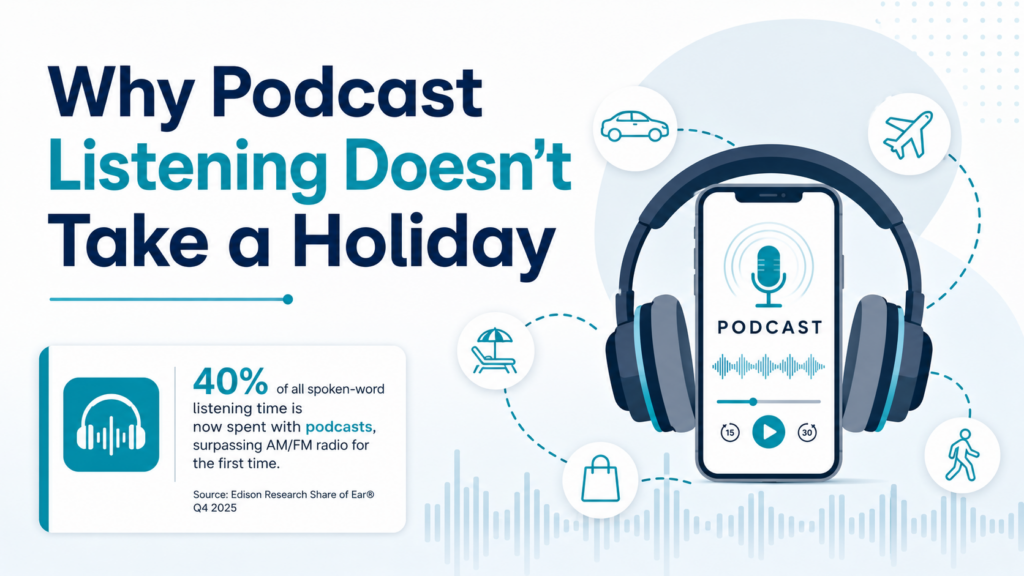
Because podcasts are consumed on-demand, listeners simply shift when they listen – not if they listen. Whether they’re driving to visit family, boarding a flight, relaxing by the pool, tackling home projects, or taking a long walk after a holiday meal, podcasts remain a regular part of their routines.
This flexibility has become one of podcast advertising’s biggest advantages.
Rather than depending on fixed broadcast schedules, podcast audiences choose when and where to listen, making the medium far less susceptible to the seasonal audience swings common in traditional media. Edison Research Share of Ear data released in 2026 illustrates just how resilient podcast consumption has become. Podcasts now account for 40% of all spoken-word listening time, surpassing AM/FM radio for the first time. That milestone reflects a long-term shift toward on-demand audio that travels with listeners wherever holidays take them.
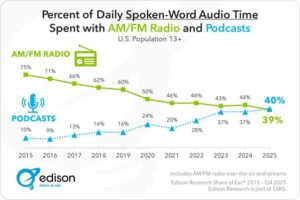
For advertisers, this means campaigns don’t have to pause simply because the calendar says it’s a holiday week. While some traditional media experiences meaningful changes in audience behavior during holiday periods, podcast listeners continue downloading, streaming, and watching their favorite shows throughout the year.
The result is a more consistent opportunity to reach engaged audiences when they’re traveling, shopping, exercising, or simply enjoying some well-earned time off.
For brands looking to maintain awareness, drive performance, and avoid the seasonal audience dips seen in other media channels, podcast advertising offers something increasingly valuable: an audience that doesn’t take holidays from listening. Marketers should keep this in mind as they finalize their Q4 media buys.