From the Desk of PodSearch CEO, Dave Newmark
Anyone who follows the podcast industry remembers the moment everything changed.
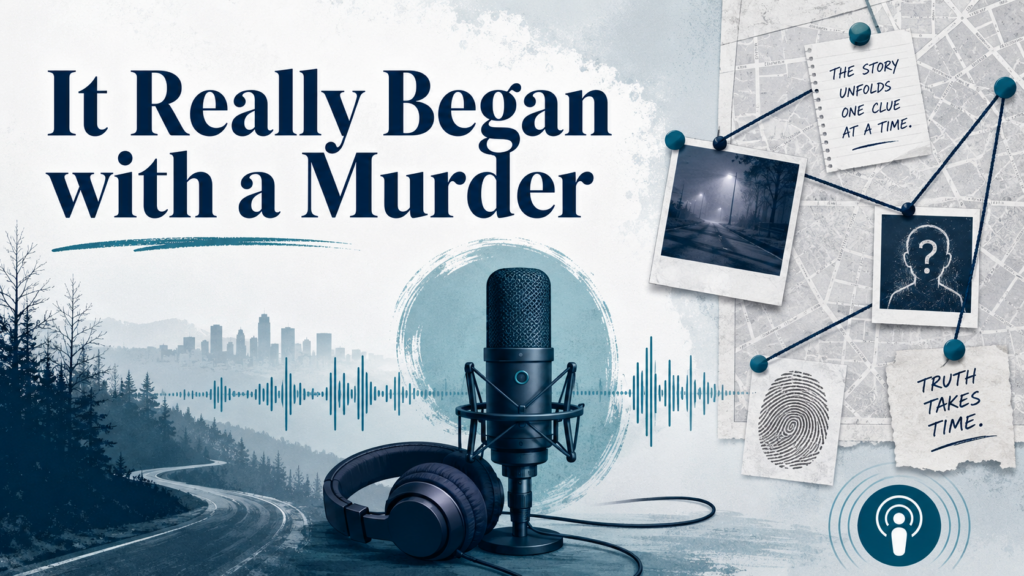
A new show launched, built around the murder of a high school student. But the breakthrough wasn’t the crime – it was the story. The narrator didn’t know the ending. Instead, she brought listeners with her, unfolding the narrative in real time, clue by clue, lead by lead, as the investigation progressed. It was immersive, suspenseful, and deeply human – the kind of storytelling that pulls you in and refuses to let go.
You know the show. Serial. It was 2014.
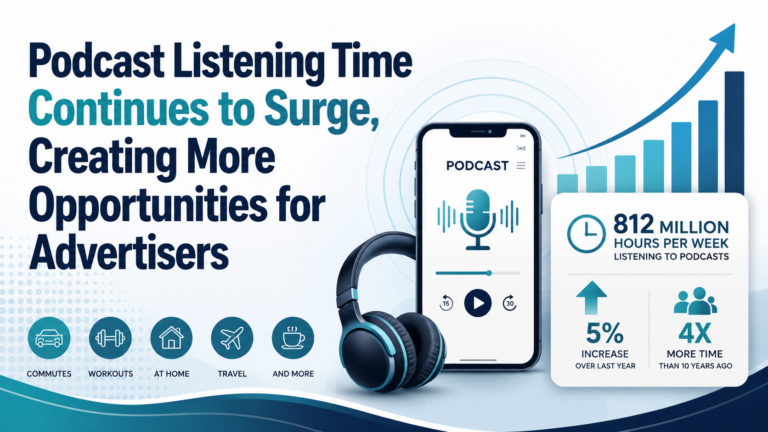
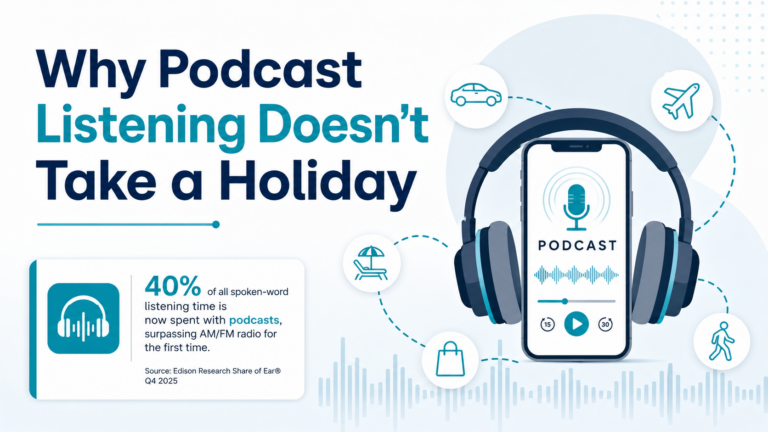
That moment marked the beginning of podcasting as a mass storytelling medium. From there, listening surged – and advertising followed. Today, podcasts reach approximately 167 million listeners in the U.S., more than half of Americans over the age of 12. Podcast advertising has become one of the fastest-growing channels in media, posting year‑over‑year revenue growth averaging more than 20% over the past two years.
Podcasting’s success isn’t rooted in technology alone. It’s rooted in stories.
Unlike most media, often driven by headlines, facts, or opinion, podcasts are built around narrative. They create space for people to tell their own stories, or to tell the stories of others, with depth, nuance, and continuity. That freedom has given rise to investigative journalism, personal journeys, cultural commentary, stories about other stories, humor, advice, and discovery across nearly every topic imaginable.
Whether audio‑only (inviting listeners to construct the visuals themselves) or delivered through video platforms like YouTube, podcasts give creators full control of how stories are shaped and shared. The medium rewards patience, authenticity, and trust.
As Peter Naylor of Nielsen noted in a recent IAB report, “For decades, media was command and control—where programmers decided what and when you would listen to, watch, or read. When that control shifted to the user, everything changed. People curate their own playlists, watch on demand, and choose the stories they want. Once audiences gained that control, they didn’t want to give it back.”
That shift is precisely why podcasting works so well for brands. When messages are woven into stories through host‑read endorsements or thoughtfully produced spots, they don’t interrupt the experience. They become part of it.
Podcasting didn’t just grow because people wanted content. It grew because people wanted stories – and podcasting delivered them better than anyone else.